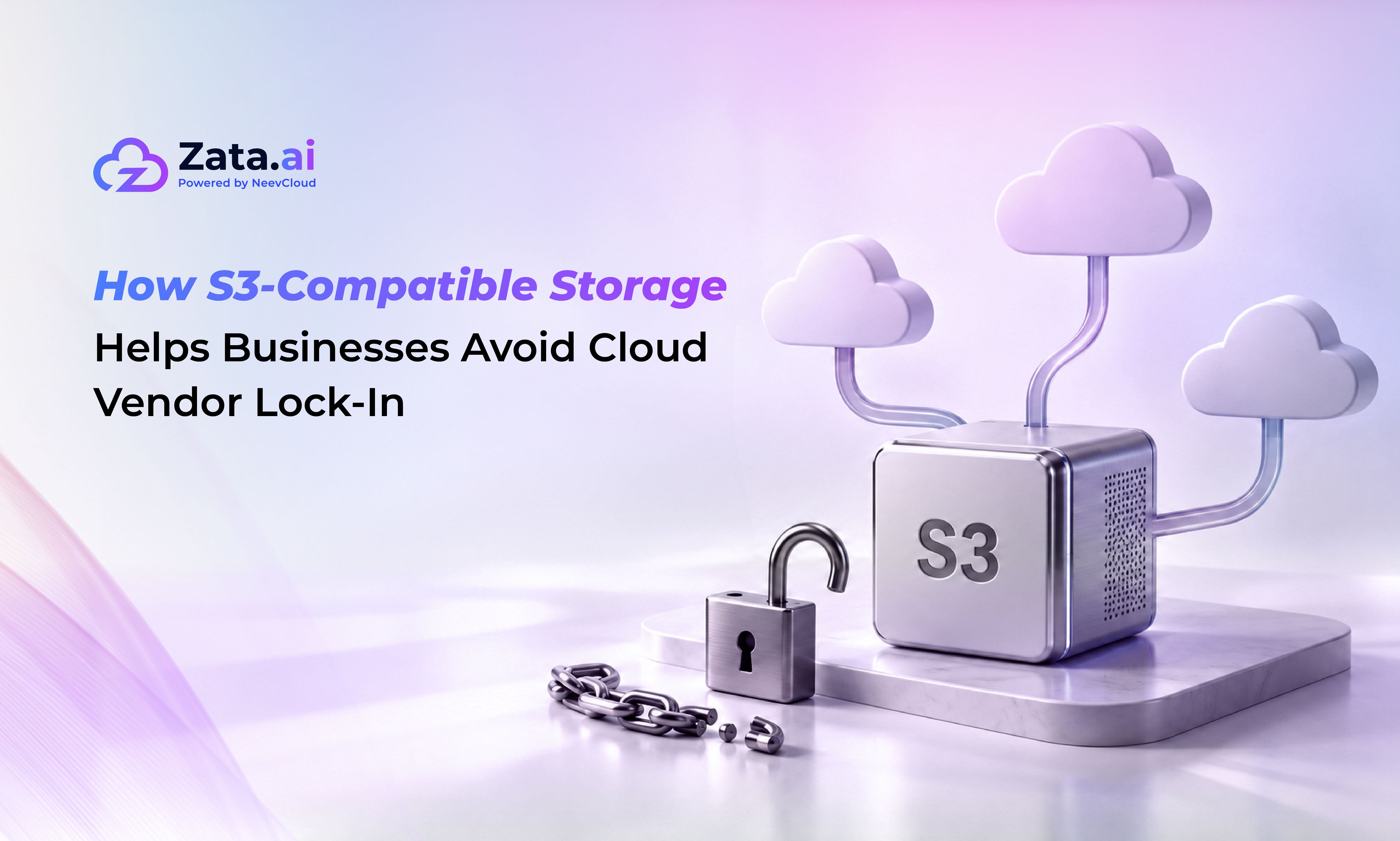

Data Portability Made Simple: S3 Integration for Cross-Cloud Migration

TL;DR
Data portability is critical for AI startups, developers, and enterprises adopting multi-cloud strategies.
S3 integration enables seamless cloud data migration across different cloud providers.
Cross-cloud migration ensures businesses avoid vendor lock-in and improve scalability.
ZATA’s S3-compatible storage offers secure, high-performance multi-cloud storage solutions.
Follow cloud migration best practices for faster, reliable, and cost-efficient cloud-to-cloud migration.
Introduction: Why Data Portability Matters
In today’s rapidly evolving AI and cloud landscape, businesses are increasingly operating in multi-cloud environments. While cloud adoption brings flexibility and scalability, moving large volumes of data between clouds can be a complex challenge. This is where data portability comes into play, ensuring your business can easily transfer, store, and manage information across different cloud platforms without friction.
Enter S3 integration, a key enabler for cross-cloud migration. By leveraging S3-compatible storage, companies can unlock cloud storage interoperability while maintaining security, speed, and reliability.
Understanding S3 Integration for Cross-Cloud Migration
S3 has become the standard for object storage, and its compatibility is now extended to multiple cloud providers. This means businesses can adopt hybrid cloud solutions without worrying about compatibility issues.
Benefits of integrating S3 into your cloud strategy include:
Seamless data transfer between S3 and other clouds.
Reduced vendor lock-in, empowering organizations to choose the best performing cloud services.
Simplified management with a single storage protocol across clouds.
ZATA’s platform makes cloud to cloud migration efficient, allowing enterprises to move workloads across clouds without downtime or data loss.
How S3 Integration Simplifies Multi-Cloud Storage
A multi-cloud strategy offers redundancy, performance optimization, and regional compliance. However, managing data across multiple providers is challenging. With S3 integration, you can standardize storage operations:
Unified Interface – Use S3 API across all cloud environments.
Automated Transfers – Schedule data transfer between clouds without manual intervention.
Monitoring & Analytics – Track migrations, bandwidth, and latency in real-time.
For developers, S3 integration translates to fewer errors, faster deployment, and smoother cloud migration workflows.
Best Practices for Cloud-to-Cloud Migration with S3
Following cloud migration best practices ensures success and reduces risk:
Assess Data Sensitivity: Identify critical and non-critical data.
Plan Migration Phases: Use incremental transfers to avoid downtime.
Secure Transfers: Encrypt data in transit and at rest.
Validate & Test: Ensure all data is correctly replicated before decommissioning legacy storage.
ZATA provides secure cloud-to-cloud data migration solutions designed for enterprises and startups alike.
FAQs
Q1: What is S3 integration?
A: S3 integration refers to connecting S3-compatible storage across multiple cloud environments, enabling seamless cloud data migration and multi-cloud storage management.
Q2: How do I migrate data across clouds using S3?
A: By implementing step-by-step S3 integration for multi-cloud environments, you can transfer data securely and efficiently, often using automation tools for cloud-to-cloud migration.
Q3: Why is data portability important?
A: Data portability ensures businesses can avoid vendor lock-in, optimize costs, and maintain flexibility when adopting new cloud platforms.
Q4: What tools help with multi-cloud data portability?
A: Platforms like ZATA provide tools for multi-cloud data portability, supporting secure, scalable, and efficient cloud migration workflows.
Q5: What are the best practices for S3 cross-cloud migration?
A: Follow cloud migration best practices including phased transfers, encryption, validation, and monitoring to ensure seamless cross-cloud migration.
Conclusion
S3 integration is no longer optional for businesses operating in multi-cloud setups. It simplifies cross-cloud migration, enhances data portability, and ensures cloud storage interoperability. By adopting ZATA’s S3-compatible storage solutions, AI startups, developers, and enterprises can achieve secure, scalable, and efficient cloud-to-cloud migration.